
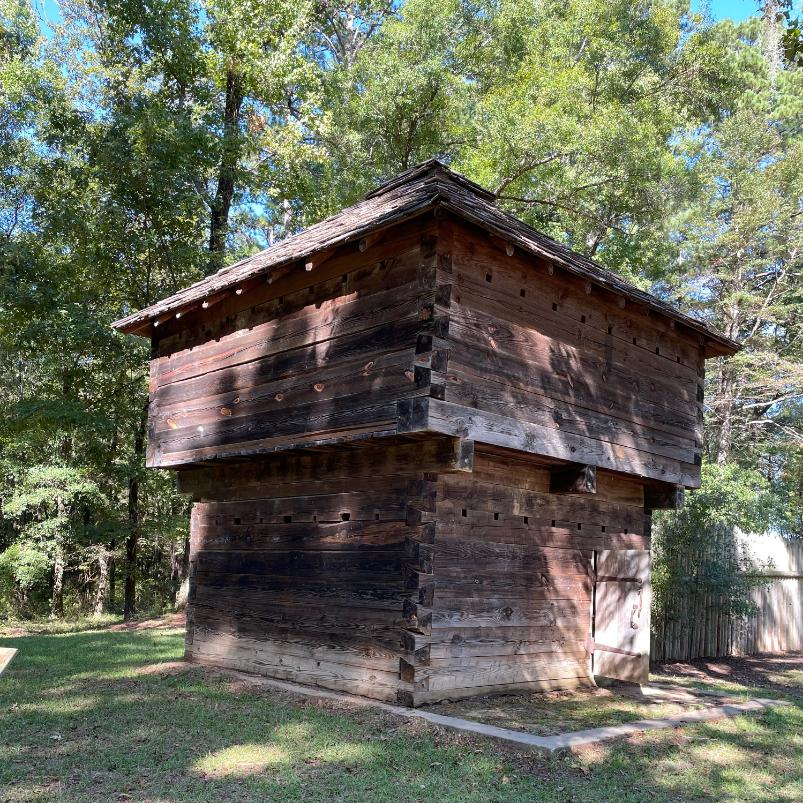
It’s an eerie place, the reconstructed Fort Mims.
To reach it, you must travel the back roads of Baldwin County, Alabama. Nestled beside it is a mobile home park, incongruously placed where swarms of Red Stick Creek Indians converged on the place back in 1813.
The last time I visited, my companion and I were the only ones there. We parked in a grassy area, and strode through the front gate, propped open with a pile of sand, just like the original one was the day it was attacked.
There are markers placed where significant actions took place inside the enclosure. Not large, boisterous ones, but small and insignificant enough not to mar the memories of the hundreds who died there.
There is a reconstructed stockade. The original ones were where the inhabitants of the fort took their last stand, until the Red Sticks managed to burn them out. They were all killed when they tried to escape the flames.
In the stillness of the morning, I could almost sense the struggle that went on. Designated as a massacre, the battle to overcome the sturdy walls of Fort Mims took hours and hours. The battle raged until nightfall, when the final inhabitants were killed and gutted.
There were once deep woods around the fort, where hundreds of Red Stick Warriors were killed by the pioneers within the fort. This fact is often not mentioned. The brave defenders of the fort did not go out without a fight.
Every August, there is an annual reenactment and commemoration ceremony held there, sponsored by the Fort Mims Restoration Association. I am contemplating attending it this year, although I think it will be difficult for me, knowing what I know. But it is a way to honor those hundreds who died, and whose sacrifice ignited the people of the United States and led to an effort to eradicate the Red Stick warriors who refused to get along with their neighbors.
Texas has the Alamo and Goliad. South Alabama has Fort Mims. All had a profound impact on the history of our country.