
It takes two hours to drive from Mobile, Alabama to New Orleans. Zipping along I-10, amongst floods of tourists and careening eighteen wheelers, the landscape is green and lush, with numerous bridges over bogs and rivers and swamps. It’s a simple drive, really, unless the traffic is especially heavy.
These days, it can be less harrowing if you are a little adventurous. There is now a train service between the two cities. The ride is about four hours long, but it will save you the hassle of driving I-10, the busiest interstate in the country.
But back in 1814, the trek between the two cities was far more difficult. The road, if it could be called such, was mired in mud all year long, due to the low-lying terrain. There were numerous swampy areas to cross, and rivers and streams that must be traversed.
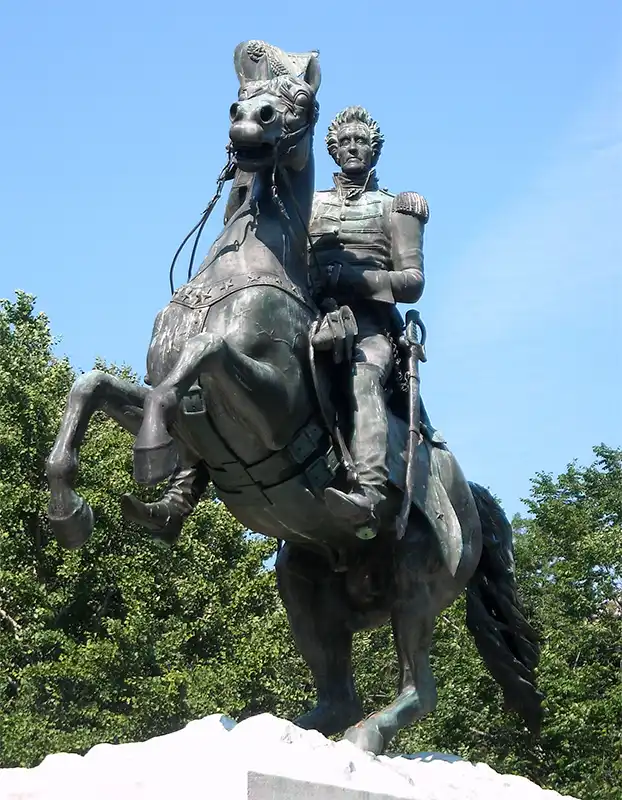
Andrew Jackson made the journey, starting from Mobile on November 22, 1814. Nearly incapacitated by a bout of dysentery, he led his column of infantry and all its accoutrements along the difficult stretch, riding at the head of the column, his back held straight as a ramrod despite his debilitating physical ailment. He had grown thin and wan because of his sickness, but he pressed on. He was determined to come to the rescue of the people of New Orleans. He had been corresponding with them for months, and knew the difficult position they were in. He was sure the British were planning on attacking the city, due to its significant position at the mouth of the Mississippi.
It took him nine days to reach the city. Nine days of fording streams and rivers, urging carts and baggage through the mud-filled road and often widening the route to accommodate his weary troops.
On December 1, 1814, a group of New Orleanians eagerly greeted him at the edge of the city. By then, he was so fatigued, he accepted a ride in a carriage to the center of the town. He had wanted to ride his horse, tall and proud, into the city, but his body was at its breaking point.
Once there, he alit from the carriage and gave a stirring speech from a balcony to the citizens who had gathered to greet him. Translated into French, his rousing words lifted the spirits of the populace. Their savior had arrived!
Little did he know he would lead these very same citizens, along with his troops and a group of pirates, into a battle that would go down in military history as one of the greatest ever fought!
To learn more about the rise of Andrew Jackson, you can view the details of my book, Of Their Own Free Will: Fort Mims to New Orleans here.